Adult clothes moths are approximately 3/8 to 1/2 inch long from wing tip to wing tip. The wings and body are golden with a brown tinge and the front wings have three dark spots. However, these distinguishing characteristics are often rubbed off, making them unideal for house moth identification. They are named as such because it’s easy to find these moths on clothing.
The larvae are small caterpillars, 3/8-inch-long in size, that live within a portable, silken case. The larvae have dark head capsules and the first thoracic segment is dark brown or black.
Lepidoptera/Tineidae
Tinea Pellionella
Female clothes moths begin laying eggs (37-48) singly on larval food the day after emerging as an adult. The larvae feed for about 33-90 days, and moths 5-11 times.
The insect then pupates within the silken larval case. Development time from egg to adult requires 46 – 116 days. Adults may lay eggs year-round in northern areas, but have only one generation per year.
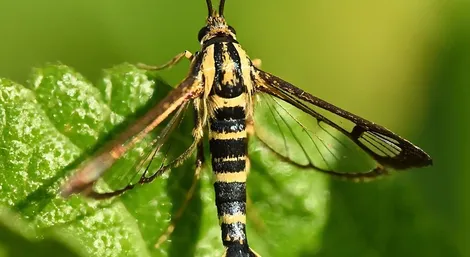
Clothes moths prefer products of animal origin, secondarily feeding on products of plant origin. They’re volatile pests that target woollens, rugs, feathers, felts, skins, drugs, furs, and stored tobacco.
Case-making clothes moths shun light. And although the males are active fliers, the females fly only short distances.
Need to know how to get rid of clothes moths? The key to controlling this pest is through thorough inspection and identification of infested materials. Infested rugs, carpets and furniture should be cleaned thoroughly and protected with a residual insecticide application. When moths are found in clothes, larvae are easily removed from infested clothing by cleaning and laundering. You can contact Terminix Canada’s Ontario branch to learn more about how to get rid of clothes moths.
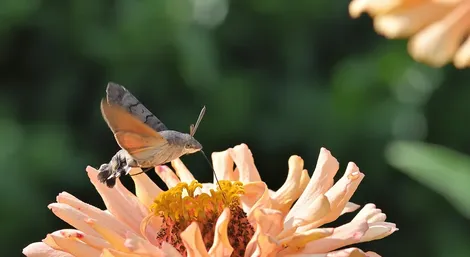
Indian meal moth adults have a 5/8″ to 3/4″ wingspan. The wings are a copper-brownish hue with a grey band close to where the wings attach to the body.
The larvae are about 1/2″ long and dirty white in colour. The head is a reddish-brown colour which is the key to house moth identification with this strain.
Lepidoptera/Pyralidae
Plodia Interpunctella
Adult females lay 100 – 400 eggs over a period of about 18 days. Indian meal moth larvae develop anywhere between 13 – 288 days. The average life cycle, egg to egg, requires 25 – 135 days. There are usually 6 generations of Indian meal moth larvae per year.
Indian meal moths infest commonly stored food products such as whole grains, dried fruit, nuts, chocolate, beans, crackers, biscuits, dried dog food, bird seed, and red peppers. The larvae produce silk webbing over the surface of the materials upon which they are feeding.
The larvae move into cracks and crevices in the food material, feeding within or near this silken mat. The mature larvae often move away from the infested materials to pupate in cracks and crevices. It’s this behavioural pattern that often allows them to be discovered by homeowners.
Curious about how to get rid of meal moths? All infested items should be discarded, and all uninfected products should be placed in insect-proof containers. Shelves and cupboards should be thoroughly vacuumed and treated with a residual pesticide. Pheromone traps can be deployed to help locate areas of activity. Terminix Canada can also help you with how to get rid of meal moths.
| Monday | OPEN 24/7 |
| Tuesday | OPEN 24/7 |
| Wednesday | OPEN 24/7 |
| Thursday | OPEN 24/7 |
| Friday | OPEN 24/7 |
| Saturday | OPEN 24/7 |
| Sunday | OPEN 24/7 |





Terminix Canada’s Ontario branch proudly serves the following areas: Barrie, Belleville, Brampton, Burlington, Cambridge, Guelph, Kingston, Kitchener, London, Milton, Mississauga, Niagara Falls, Oakville, Ottawa, Sarnia, Simcoe, St. Catharines, Thornhill, Toronto, Vaughan, Windsor